How old is your pet in human years, and what does that mean for you?
Grief often starts early: 75.4%[1] of owners in the RSPCA's survey felt it before their pet died. Knowing your pet's life stage can turn a vague dread into time well spent.
- Dogs by size, cats, rabbits, birds, horses and more
- Life stage and typical life expectancy, with sources
- Gentle prompts for planning, not alarm

Pet age & senior years calculator
Choose your pet and their age to see a human-years comparison and which life stage they're in.
In human years
about 54
Based on the common vet age chart.
Life stage
Adult
Typical life expectancy: about 12.7 years (US medium breeds).
In the prime years. Regular check-ups are all the planning most families need right now.
Source: Montoya et al. 2023, Frontiers in Veterinary Science - Banfield Pet Hospital life expectancy tables (13.3 million dogs, 2.4 million cats, 2013-2019). Every animal is an individual; breed, size and care all make a difference
Next step: Know your options ahead of time →
Using the calculator
How to use the pet age calculator
Open the Your pet menu and choose your animal. Dogs are listed by size, from toy to giant, because size changes aging more than almost anything else; cats, horses, small mammals, birds, reptiles and fish follow. Then enter their Age in years. Half years work (1.5 for eighteen months), which matters for small animals. You'll see an "in human years" figure, a life stage (young, adult, senior or geriatric), a short note about what that stage means, and the typical life expectancy for that kind of animal, with its source.
Results appear straight away and change as you adjust the inputs, so you can compare, say, a 10-year-old small dog with a 10-year-old giant breed. It opens on a medium dog aged 8 until you change it. The calculator doesn't ask for your pet's name or anything about you.
The numbers behind it
How it works out age and life expectancy
For dogs, cats and horses, human-year figures follow the age charts vets commonly use: a dog or cat's first year counts as about 15 human years and the second as about 9 more, then each year adds 4 to 7 depending on size (4 for cats). For every other species, the tool scales your pet's age against its typical lifespan and maps that onto an 80-year human life. These are rough guides: every animal ages at its own pace, and a well-cared-for pet can stay youthful for years. Life expectancy figures come from large studies of veterinary records.
13.53 years[2]
Small-breed dogs in the US have a life expectancy of about 13.5 years - the longest of any size group.
11.51 years[3]
Large-breed dogs in the US have a life expectancy of about 11.5 years.
9.51 years[4]
Giant-breed dogs in the US have a life expectancy of about 9.5 years.
Cats are similar to medium dogs on average: US cats seen at Banfield hospitals had a life expectancy at birth of 11.18 years[5] in a large study of veterinary records, and UK cats 11.74 years[6] in a VetCompass study of UK cats. Size matters more for dogs: by our calculation from the Banfield data, small-breed dogs live about 4 years longer[7] than giant breeds, which is why the menu splits dogs by size. Averages include animals who died young, so a healthy senior often lives beyond them.
For birds, reptiles and small mammals, life expectancy varies enormously. A budgie and a blue-and-gold macaw are both parrots but may live decades apart, and a box turtle can outlive its first owner. The calculator covers a set list of common species, from hamsters and ferrets to cockatiels, ball pythons and koi, and shows the typical lifespan for each. If yours isn't listed, or even if it is, it's worth asking an exotics vet what's normal.
A worked example
Example: a 10-year-old German Shepherd
Enter a large dog aged ten. The calculator shows about 72 in human years and places them in their senior stage, with a typical life expectancy for large breeds of about eleven and a half years. The gentle note that follows suggests asking your vet about senior check-ups, comfort and what signs to watch for, and mentions that some families like to know their aftercare options early, so nothing has to be decided in a rush.
That can be a hard thing to see on a screen. But many owners say they're glad they knew. It gives you room to make the next year a good one: more short walks to favorite places, photos with the family, maybe a paw print taken while your dog can still enjoy the fuss.
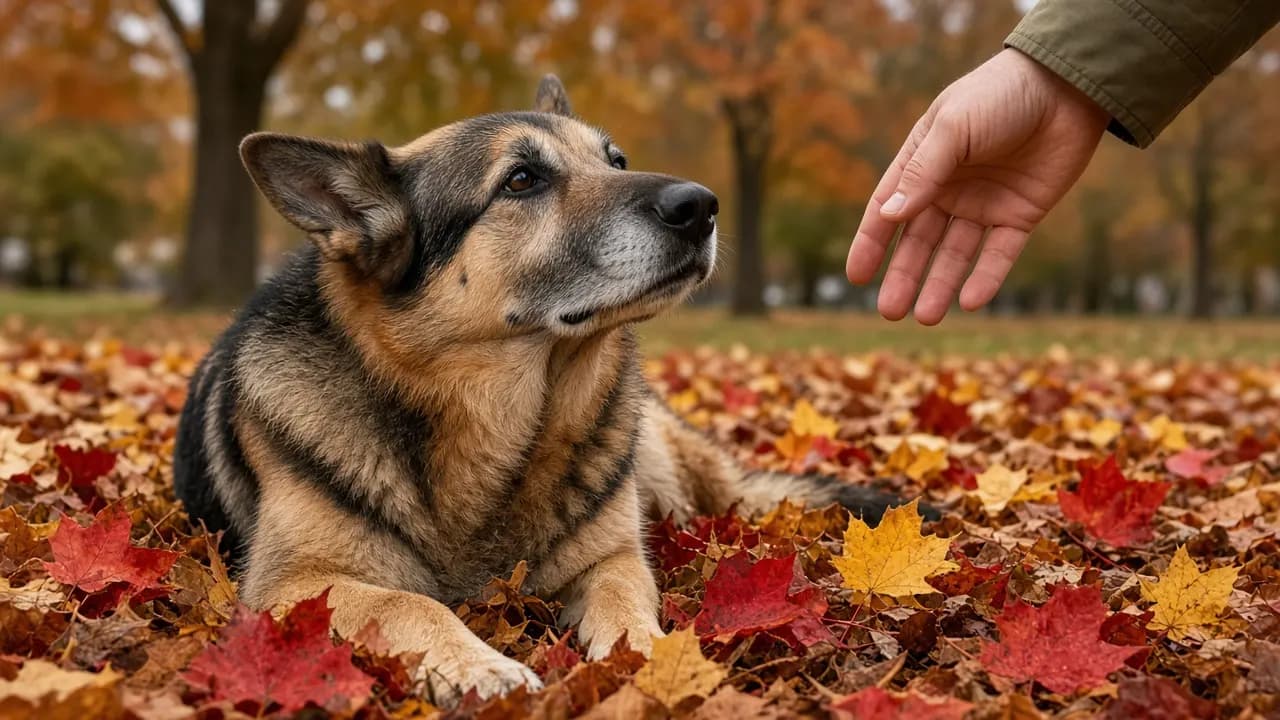
Grief before goodbye
What to do with the result if it brings up grief
Anticipatory grief is the sadness, worry and even guilt that arrive before a pet dies. It's very common and it's not a sign you're giving up on them. Most pets' lives end with a decision rather than suddenly: in the Dog Aging Project's study of US dog deaths, 83.0%[8] were by euthanasia. Thinking ahead while you're calm can make that decision gentler later.
- Talk with your vet about quality of life, and ask what signs would tell you it's time.
- Decide the practical things early, like where you'd want the goodbye to happen and what aftercare you'd choose.
- Make the good days count. A list of favorite things to do together can help you notice what's still joyful.
- Tell someone. Grieving someone who's still here can be lonely; saying it out loud helps.
Our article on anticipatory grief goes deeper, and preparing a support plan before a pet dies helps you line up people and resources in advance.
Which feels truest about bringing home another animal?
Tap an answer to vote and see how others answered. Anonymous.
Keeping it in perspective
What the age calculator can't tell you
It can't predict how long your pet will live. Life expectancy is an average across thousands of animals, including those lost to accidents and illness when young. Breed, weight, genetics, diet and care all matter, and a vet who knows your pet will always know more than a calculator.
It also can't tell you when to say goodbye. That's a decision made from your pet's comfort and your vet's advice, not a birthday. If you're struggling with that decision now, the aftercare options comparison may help with one part of the planning, and a counselor who understands pet loss can help with the emotional side.

Free tool
Aftercare options compared
Compare private, communal and water cremation with burial on cost, timing and what comes home.
Where next
Next steps if your pet is in their senior years
If the result has left you feeling heavy, the private grief check-in works for grief before a loss too. If you'd like support lined up in advance, tell us about your pet and we'll email you options, from groups that welcome people facing a loss to counselors who work with anticipatory grief. Our overview of pet loss support explains each kind, support near you shows what exists by area, and the live poll results show how other owners have prepared.

Reader polls
What would you choose?
Vote anonymously and see how other readers answered. The results are live counts from people who visit this site, so they show real opinions, not a scientific sample.
Which feels truest about bringing home another animal?
Tap an answer to vote and see how others answered. Anonymous.
How long before you felt ready for another pet?
Tap an answer to vote and see how others answered. Anonymous.

Free tools to help you plan

Pet age & senior years calculator
Convert your pet's age and see when senior-care and planning conversations usually start.
Aftercare options compared
Compare private, communal and water cremation with burial on cost, timing and what comes home.

Pet loss grief check-in
A private, two-minute check-in on how you're coping, with ideas that match where you are.
Questions people ask
At what age is a pet considered a senior?
It depends on species and size. In the calculator, giant-breed dogs reach senior from about seven, cats from about nine and a half, and small dogs from about ten. Rabbits and guinea pigs get there much earlier, around three, while African greys wait until about eleven and box turtles far longer. The calculator shows the life stage for your pet's kind.
How accurate are human-year conversions for pets?
They're rough guides, not precise science. The old idea that one dog year equals seven human years is too simple; dogs mature very fast in their first two years and then age at different speeds depending on size. Use the result as a sense of life stage, not an exact figure.
Is it normal to grieve before my pet has died?
Yes, very. Three in four owners in the RSPCA's pet loss survey felt anticipatory grief. It can show up as sadness, worry, irritability or guilt, and it often comes and goes. It doesn't mean you love your pet any less today. Talking about it, and making plans while you're calm, usually helps.
Should I plan my pet's aftercare while they're still alive?
Many owners find it easier. Deciding on cremation or burial, and where you'd like the goodbye to happen, is far gentler with time to think than in an emergency. It doesn't mean you're expecting the end soon. It simply means that when the time comes, you can focus on your pet rather than on phone calls.


Sources and our estimates
- [1] 75.4% of RSPCA pet-loss survey respondents experienced anticipatory grief before their pet died. RSPCA — Pet Loss Survey Results, 2026.
- [2] Small-breed dogs in the US have a life expectancy of about 13.5 years - the longest of any size group. Montoya et al. 2023, Frontiers in Veterinary Science - Banfield Pet Hospital life expectancy tables (13.3 million dogs, 2.4 million cats, 2013-2019), 2023.
- [3] Large-breed dogs in the US have a life expectancy of about 11.5 years. Montoya et al. 2023, Frontiers in Veterinary Science - Banfield Pet Hospital life expectancy tables (13.3 million dogs, 2.4 million cats, 2013-2019), 2023.
- [4] Giant-breed dogs in the US have a life expectancy of about 9.5 years. Montoya et al. 2023, Frontiers in Veterinary Science - Banfield Pet Hospital life expectancy tables (13.3 million dogs, 2.4 million cats, 2013-2019), 2023.
- [5] US cats seen at Banfield hospitals have an average life expectancy at birth of 11.18 years. Montoya et al. 2023, Frontiers in Veterinary Science - Banfield Pet Hospital life expectancy tables (13.3 million dogs, 2.4 million cats, 2013-2019), 2023.
- [6] UK cats have a life expectancy at birth of 11.74 years. Teng et al. 2024, Journal of Feline Medicine and Surgery - VetCompass cat life tables, 2024.
- [7] Small-breed dogs in the US outlive giant breeds by about 4.0 years on average. Our estimate: Small-dog life expectancy (13.53) - giant-dog life expectancy (9.51). How we calculate.
- [8] In the Dog Aging Project, 83.0% of 646 US dog deaths (Dec 2019-Mar 2021) were by euthanasia. Dog Aging Project End of Life Survey - Journal of the American Veterinary Medical Association (2026), via PubMed Central, 2026.
Worried about a pet who's getting older?
Tell us what you need and where you are. We'll reply by email with clear options and prices so you can decide in your own time.