Helping a child when the family pet dies: what to say and what to do
Tell children the truth in plain, short words: the pet died, their body stopped working and they won't come back. Then give them a small job in saying goodbye. Parents want help with this: 93.4%[1] in the RSPCA's survey wanted better guidance on supporting children through pet loss.
By the Pet Loss Grief Support Resources editorial team · Updated September 24, 2026 · 5 min read · Sources
- Exact words to use, and words to avoid
- What to expect at each age
- Small rituals a child can lead

The first conversation
What should you say to a child when a pet dies?
Use the word "died", keep it short and let them ask the next question. Something like: "Biscuit died this morning. His body was very old and it stopped working. He can't come back, and we're all going to miss him." Then stop and wait. Children often ask one question, go off to play and come back with another an hour later.
Avoid phrases that sound gentle to adults but confuse children. "Put to sleep" can make bedtime frightening. "We lost him" can send a child looking. "He ran away to a farm" tends to unravel years later and damages trust at exactly the wrong moment. If the pet was euthanized, you can say: "The vet gave him medicine so he could die without pain, because his body couldn't get better."
What words did you use to tell a child the pet had died?
Tap an answer to vote and see how others answered. Anonymous.
Age by age
How do children of different ages understand a pet's death?
| Age | How they often understand it | What helps |
|---|---|---|
| Under 5 | May not grasp that death is permanent; may ask when the pet is coming back | Simple repeated answers, cuddles, keeping routines steady |
| 5 to 8 | Understand it's permanent but may think they caused it | Saying clearly it wasn't their fault; a drawing or letter to the pet |
| 9 to 12 | Curious about what happened to the body; may worry about other deaths | Honest facts, including about cremation or burial if they ask |
| Teenagers | Grieve like adults but often privately; may hide it to protect you | Space, an invitation to talk, a role in the memorial |
Young children grieve in bursts. Crying at breakfast and laughing at cartoons by nine is normal, not a sign they didn't care. Repeated questions are normal too; answering "Is Biscuit coming back?" for the fifth time is part of how a small child learns what death means.
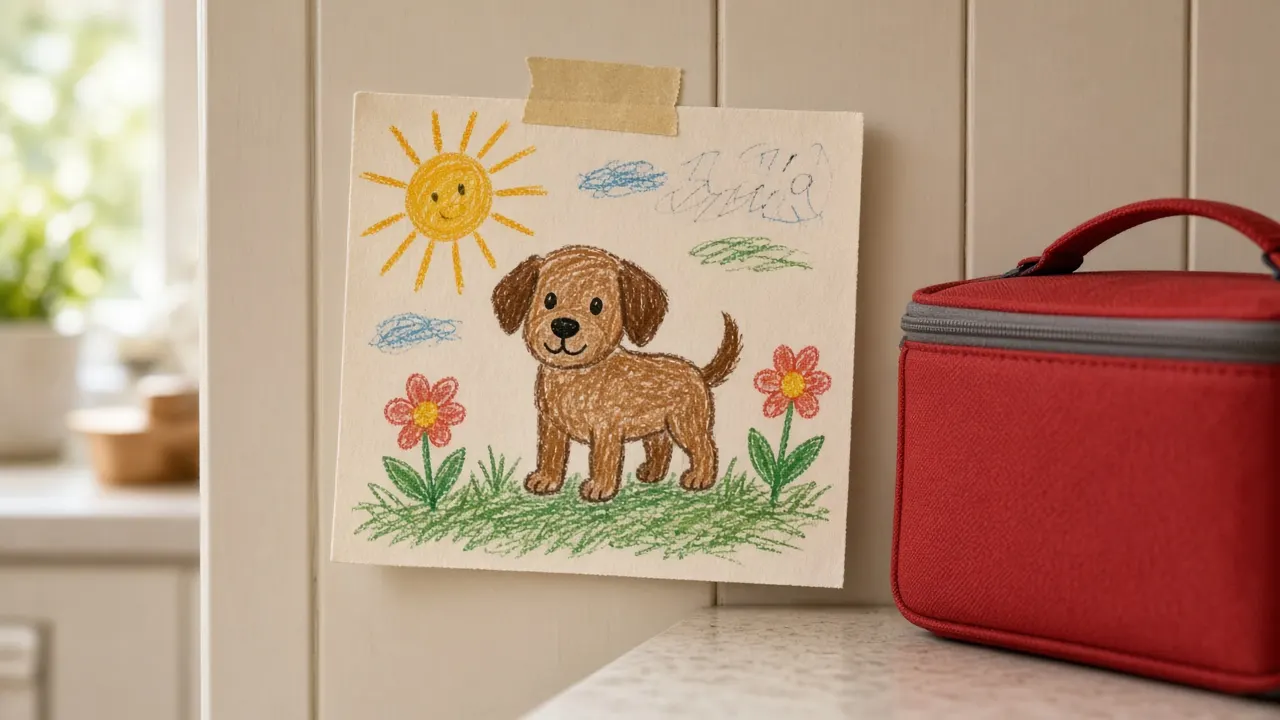
Why it matters
Why is a pet's death often a child's first experience of loss?
Because pets are everywhere in family life and their lives are short. About 59%[2] of UK households include an animal, and around 66% of US households own a pet[3]. The small animals given to children often have the shortest lives: Britain's estimated 700,000[4] pet guinea pigs live around four years, and pet rats only 1.5-3 years[5]. A VetCompass study of UK pet hamsters put their median age at death at 1.75 years[6]. By our calculation, an average UK cat lives about 6.7 times as long as a pet hamster[7], so a child's first pet is often the first to die.
That makes a pet's death a rehearsal, whether we like it or not. How it's handled teaches a child what grief looks like, whether sadness is allowed and whether adults tell the truth. Letting them see you cry, and hearing you say "I miss her too", is one of the most useful things you can model. If you're struggling yourself, our pet loss support resources guide lists free helplines for adults.
93.4%[1]
The goodbye itself
Should a child be there when the pet is put to sleep?
It depends on the child and on the circumstances. Many vets say older children who ask to be present, and who've been told what they'll see, often cope well and find it less frightening than imagining it. Younger children usually do better saying goodbye beforehand, then seeing the pet afterwards if they want to, so they understand the pet is truly gone.
- Explain beforehand: the pet will be lying down, the vet will give an injection, the pet will go still and won't wake up. Their eyes may stay open.
- Give them a way to leave the room at any point, with another adult.
- Let them bring something: a drawing, a toy, a note to go with the pet.
- Never force a child to be there, or to stay away if they strongly want to come.
If the goodbye is coming but hasn't happened yet, our piece on anticipatory grief while a pet is still alive covers how to prepare the whole family.
Something to do
What small rituals can a child lead after a pet dies?
Children cope better with a job. A short ritual they help design gives the sadness somewhere to go and marks the change clearly. It doesn't need to be elaborate; five minutes in the garden can mean more than an hour-long ceremony.
- Paint a stone with the pet's name and put it where the pet liked to sleep.
- Plant bulbs or a small shrub and water it together each week.
- Make a memory box: a collar, a favorite toy, photos, a drawing.
- Write or draw a "letter to Biscuit" and read it out, or keep it private.
- Choose a photo for their bedroom and pick the frame themselves.
The farewell planner lets you choose who comes, where you gather and which rituals to include, then prints a simple checklist, which older children often enjoy filling in. Our article on choosing a personal ritual after pet loss has more ideas.

Free tool
Farewell & memorial service planner
Build a simple goodbye: who, where, readings, rituals and a checklist.

Watching for more
How do you know if a child needs extra support?
Most children's grief after a pet eases within weeks, returning briefly around reminders. Talk to their teacher, school counselor or doctor if, after several weeks, a child is sleeping badly, won't separate from you, has lost interest in friends or play, or keeps asking whether you or they are going to die. Teenagers who withdraw completely may need a gentle nudge toward someone outside the family. The Dougy Center, a US nonprofit for grieving children and families, publishes free toolkits for parents and teens, and the ASPCA's end-of-life care page suggests remembering a pet together with the people who loved them.
A pet's death can also stir up an earlier loss, such as a grandparent. Let the school know what's happened either way; teachers notice things parents don't. Some families find a pet loss support group that welcomes parents helps them hold steady for their kids. For more on the kinds of help available, see our support services page, or tell us your children's ages and we'll email family-friendly options near you. You can also browse support by area, try the private grief check-in for yourself, or see how other parents answered on the live poll results page.

Reader polls
What would you choose?
Vote anonymously and see how other readers answered. The results are live counts from people who visit this site, so they show real opinions, not a scientific sample.
What words did you use to tell a child the pet had died?
Tap an answer to vote and see how others answered. Anonymous.
What was the hardest part of losing your pet?
Tap an answer to vote and see how others answered. Anonymous.
Did your other animals seem to notice the loss?
Tap an answer to vote and see how others answered. Anonymous.


Questions people ask
Should I tell my child the truth about how the pet died?
Yes, in words that fit their age. Children usually cope better with simple facts than with stories they later discover weren't true. You don't have to share every detail. "She was very sick and the vet helped her die without pain" is honest and enough for most young children.
Is it OK to say the pet was put to sleep?
It's better avoided with young children. They may link it to their own sleep and become afraid of bedtime or of surgery that needs anesthetic. Use "died" and explain that the vet gave medicine so the pet wouldn't hurt. Older children can learn the phrase "put to sleep" once they understand what it means.
Should we get a new pet quickly to help our child?
Usually it helps to wait a little. A quick replacement can teach a child that loss can be fixed by swapping, and the new animal may be resented. Give the family time to grieve, then involve your child in the decision. Our article on when to get another pet covers the signs of readiness.
My child doesn't seem upset. Should I worry?
Not usually. Children often grieve in short bursts, or later than adults expect, sometimes weeks afterwards. Some show it through play, like burying a toy. Keep the door open by mentioning the pet naturally, and watch for changes in sleep, school or friendships over the following weeks.
Can children see the pet's body after it dies?
If they want to, it often helps, especially for young children who struggle to understand that death is permanent. Prepare them for what they'll see: the pet will be still, may feel cool and won't respond. Let them touch or stroke the pet if they wish, and never insist.


Sources and our estimates
- [1] 93.4% of parents in the RSPCA survey wanted better guidance on helping children through pet loss. RSPCA — Pet Loss Survey Results, 2026.
- [2] 59% of UK households include an animal companion (Statista 2021, cited in peer-reviewed pet bereavement research). Coping with Animal Companion Loss: A Thematic Analysis of Pet Bereavement Counselling (PMC11017691), 2021.
- [3] CANA reports 66% of U.S. households (86.9 million homes) own a pet. Cremation Association of North America — Pet Aftercare, 2025.
- [4] An estimated 700,000 guinea pigs are kept as pets in Britain, with an average lifespan of about 4.0 years. Mata F. Cavy lifespan: survival analysis and lifetables for the pet guinea pig in Britain. PeerJ, 2025 (PMID 40692850), 2025.
- [5] Pet rats live about 1.5-3 years and weigh 350-650 g as adults. Merck Veterinary Manual - Table: Rats at a Glance.
- [6] Pet hamsters in the UK have a median age at death of 1.75 years. O'Neill et al. 2022, Journal of Small Animal Practice - VetCompass hamsters, 2022.
- [7] An average UK cat lives about 6.7 times as long as an average pet hamster (11.74 vs 1.75 years). Our estimate: 11.74 / 1.75. How we calculate.
Get family-friendly pet loss support
Tell us what you need and where you are. We'll reply by email with clear options and prices so you can decide in your own time.