Choosing a ritual after your pet dies: small acts that help grief move
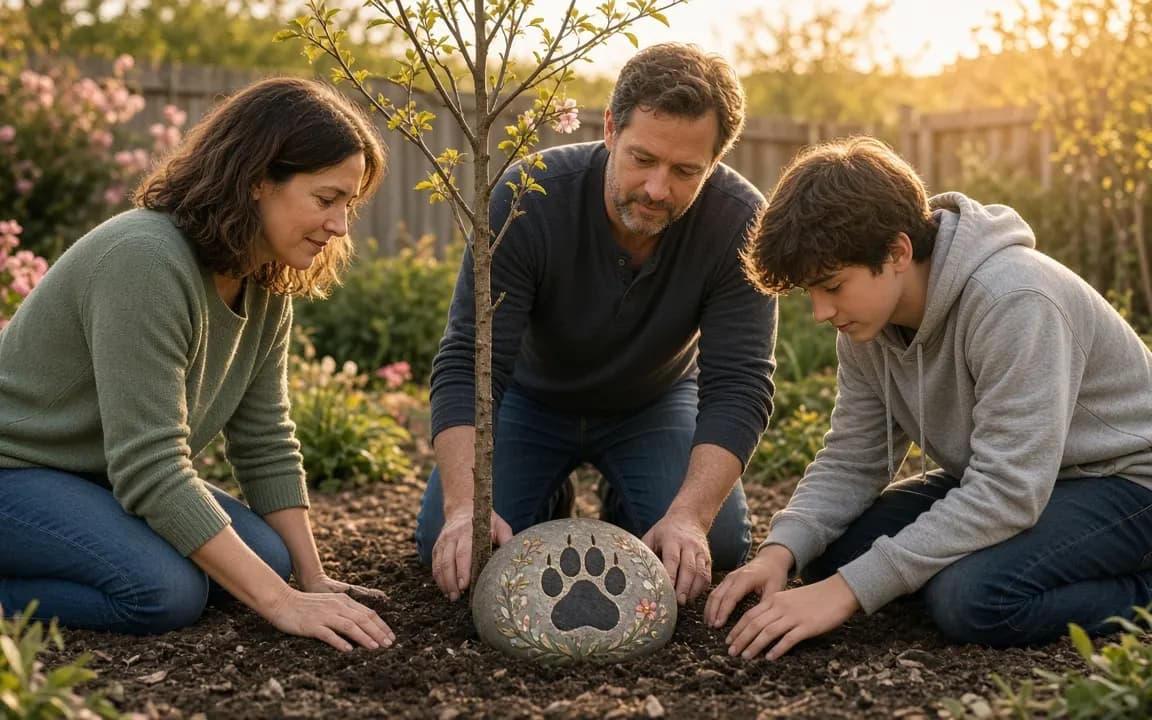
A ritual is any small, deliberate act that marks your pet's life and death, like lighting a candle, planting a tree or walking their route one last time. Rituals help because they give grief a shape and a place to go. They don't need to cost much, and the most meaningful ones are usually personal.
By the Pet Loss Grief Support Resources editorial team · Updated September 24, 2026 · 4 min read · Sources
- Why rituals ease grief, even for skeptics
- Four kinds of ritual, matched to how you grieve
- Low-cost ideas and dates worth planning
Why bother
Why do rituals help after a pet dies?
Rituals turn a loss you can't control into an action you can. Psychology research on grief has found that people who performed a ritual after a loss reported feeling less grief, even people who said they didn't believe rituals work. The act itself seems to restore a small sense of control at a time when you have almost none.
Pet loss is especially short of rituals. There's usually no funeral, no wake, no set day when friends gather. In the RSPCA's pet bereavement survey, 57.1%[1] of bereaved owners felt they had to hide their grief. A ritual, even a private one, is a way of saying the loss counts, whoever else is watching.
A ritual doesn't have to be grand. It just has to be done on purpose.
Options
What kinds of rituals do people choose after pet loss?
It helps to think of rituals by when they happen and what they do. Most people end up with one or two from different rows.
| Kind | When | Examples |
|---|---|---|
| Goodbye | Around the death | Reading a letter aloud, a last brush of the coat, a blanket from home sent with them |
| Transition | First weeks | Welcoming the ashes home, washing and putting away the bowls, moving the bed |
| Remembrance | Anniversaries and holidays | A candle, a favorite walk, looking through photos, a special meal |
| Continuing bond | Ongoing | Donating in their name, volunteering at a shelter, a planted tree you tend |

Finding yours
How do you choose a ritual that feels like you?
Start with how you already handle big feelings. Rituals that fit your nature are the ones you'll actually do, and the ones that help.
- If you think with your hands: plant something, build a small memory box, bake the treats they loved for a friend's dog.
- If you think in words: write a letter to your pet, a short obituary for friends, or a list of 20 things you'll remember.
- If places matter to you: walk the old route at the old time, or visit the beach where they ran and leave a stone.
- If giving helps you: donate their unopened food to a shelter, or volunteer an hour a month in their name.
- If you need people: invite two or three friends who knew your pet for a drink and a story each.
The farewell planner walks you through who to include, where to gather, which rituals to choose (candle, reading, planting, letter) and even music, then prints a simple checklist. It works just as well for a solo evening as for a family gathering.

Free tool
Farewell & memorial service planner
Build a simple goodbye: who, where, readings, rituals and a checklist.
Money
Do pet memorial rituals need to cost anything?
No. Many of the rituals people describe as most meaningful are free: a walk, a letter, a candle, a shared story. When people do spend, it's usually on one lasting object. Market research suggests about 56%[2] of pet owners choose some form of memorial service, and another report finds 51% of owners are interested in personalized memorials[3]. By our estimate, that means around 765,000 US families a year[4] are open to something personal, our calculation from the number of US pets cremated each year. The ASPCA's end-of-life care advice points the same way, suggesting you memorialize your pet with the people who loved them.
Prices for small memorials are lower than people expect. One US aftercare provider charges $5–$15[5] for keepsakes like a clay paw impression or a fur clipping, and engraved natural-stone garden markers run $38–$115[6] from one maker. A biodegradable urn with a seed capsule costs about $99[7]. The memorial budget planner helps you total up a plan before you buy anything.
Which memorial feels most like your pet?
Tap an answer to vote and see how others answered. Anonymous.
A tender moment
What ritual can help when the ashes come home?
The day a small box arrives is often harder than expected. A simple welcome ritual can soften it: choose where the ashes will sit before they arrive, light a candle, say your pet's name and a sentence about them, and let yourself sit for a few minutes. You don't have to decide on an urn, scattering or burial that day.
If you're still weighing up what to do with the ashes long term, our aftercare options comparison sets out keeping, scattering, burying and planting side by side, with the practical points for each.
Later on
How can rituals help on anniversaries and holidays?
Grief often returns around dates: the first birthday or adoption day, the first holiday season, the anniversary of the death. Planning a ritual for those days in advance changes them from something that ambushes you into something you meet on your own terms. Our pet grief timeline explains why these waves come.
Some people keep the same ritual every year. Others let it change: tears the first year, a donation the second, a relaxed walk with a new dog by the third. Both are fine. If you can't be in the same place as family on the day, our guide to private and remote remembrance has ideas that work apart.
How do you mark the day your pet died?
Tap an answer to vote and see how others answered. Anonymous.
If it doesn't help
What if a ritual doesn't make you feel any better?
Rituals aren't magic; they ease grief rather than end it. If you've marked your pet's life and still feel stuck months later, that's a sign to add a person, not another ritual. A pet loss support group or counselor can help. The private grief check-in is a quick way to see where you are. Or tell us what's happening and we'll email options near you. Our overview of pet loss support, local support pages and the live poll results are other quiet places to start.

Reader polls
What would you choose?
Vote anonymously and see how other readers answered. The results are live counts from people who visit this site, so they show real opinions, not a scientific sample.
How do you mark the day your pet died?
Tap an answer to vote and see how others answered. Anonymous.
Which memorial feels most like your pet?
Tap an answer to vote and see how others answered. Anonymous.
What helped you most in the first weeks?
Tap an answer to vote and see how others answered. Anonymous.

Free tools to help you plan
Farewell & memorial service planner
Build a simple goodbye: who, where, readings, rituals and a checklist.

Memorial budget planner
Add up cremation, urn, keepsakes and a farewell so the total holds no surprises.

Aftercare options compared
Compare private, communal and water cremation with burial on cost, timing and what comes home.
Questions people ask
What are some simple rituals after a pet dies?
Lighting a candle at the time your pet used to be fed, writing them a letter, walking their favorite route, planting a shrub or bulbs, donating their food to a shelter or gathering a few friends to share one story each. The most helpful rituals are usually small, personal and repeatable.
Is it weird to hold a funeral for a pet?
No. Many families hold a short service, in the garden, at a pet cemetery or indoors with the ashes. It can include readings, music, photos and a few words from each person. It gives children and adults a clear moment to say goodbye, which ordinary life doesn't provide for pets.
When should I do a memorial ritual for my pet?
Whenever it feels right. Some people want something within days; others wait until the ashes come home or until the first anniversary. There's no deadline and no rule that it has to happen once. Many people find a small first ritual early, then a larger one later, works well.
What can I do with my pet's belongings?
There's no rush. Some people keep a collar or toy in a memory box, donate unused food, beds and blankets to a shelter, and put the rest away until they're ready. Donating in your pet's name can itself become a ritual that helps other animals.
Can rituals help if I don't believe in an afterlife?
Yes. Rituals don't need any particular belief to help. Research on grief rituals found benefits even among people who didn't expect them to work. What matters is doing something deliberate that honors your pet and gives your grief a clear place to go.

Sources and our estimates
- [1] 57.1% felt they had to hide their grief after a pet died, and 57.8% perceive stigma around pet loss. RSPCA — Pet Loss Survey Results, 2026.
- [2] Market.us reports that about 56% of pet owners choose memorial services for their pets. Market.us — Pet Funeral Services Market report page, 2024.
- [3] Astute Analytica reports 51% of pet owners are interested in personalized memorials and 70% consider memorialization significant. Astute Analytica via GlobeNewswire — Global Pet Preservation Services Market to Hit USD 112.7 Million by 2032 (Apr 2, 2024), 2024.
- [4] Around 765,000 U.S. families a year are likely open to a personalized pet keepsake. Our estimate: 1.5M pet cremations x 51% interest in personalized memorials. How we calculate.
- [5] Memorial add-ons at A Greener Place: $15 laser-engraved paw print, $10 clay paw impression, $10 nose print, $5 fur clipping. A Greener Place Pet Aquamation – Pricing, 2026.
- [6] Adirondack Stone Works sells engraved natural-stone pet memorials from $38 (6–7 inch mini) to $115 (13–14 inch large), with 1–4 lines of text included. Adirondack Stone Works Pet Memorials, 2026.
- [7] The Bios Urn for pets, a biodegradable urn with a seed capsule, costs $99. Bios Urn – Pets, 2026.
Get ideas and support for remembering your pet
Tell us what you need and where you are. We'll reply by email with clear options and prices so you can decide in your own time.