Finding pet loss support in Yuma, Arizona
By our estimate, about 3,250 dogs and cats die in Yuma every year, so someone near you is grieving right now too. Here's where people find support, locally and online.
- Free groups and helplines, explained
- Counselors who understand animal loss
- Crisis numbers if things feel too heavy
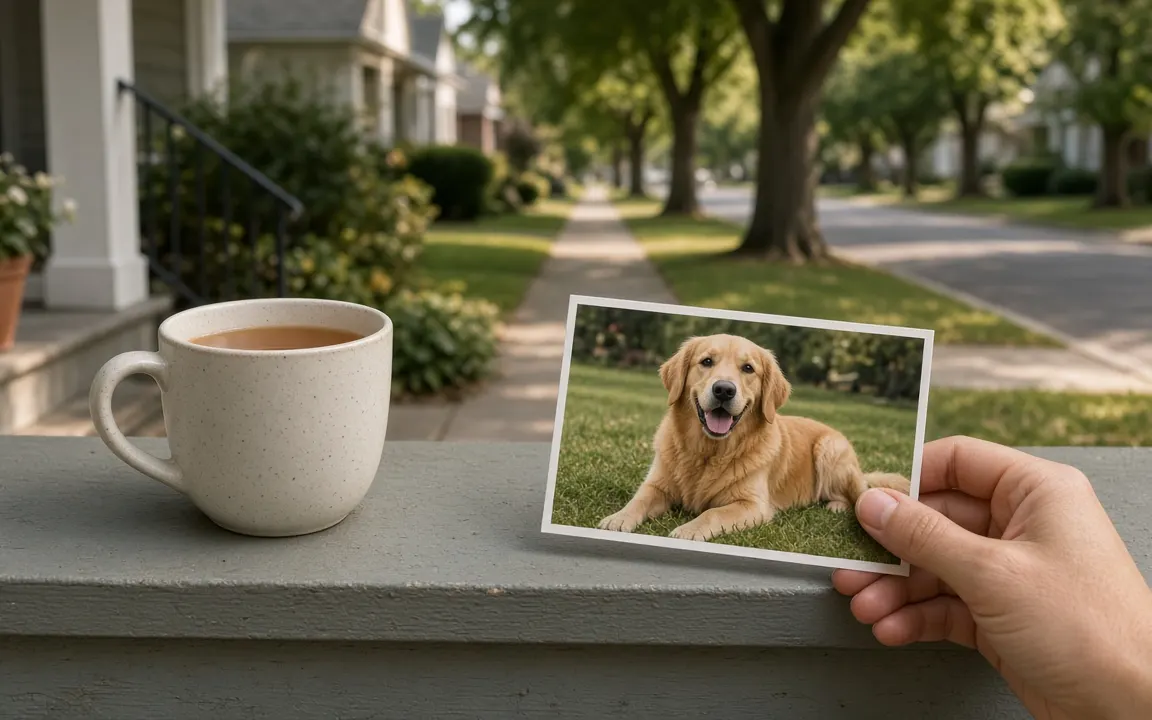
Yuma, Arizona
Grief support around Yuma, near and online
With military families at the Marine Corps air station and the proving ground, many Yuma households know about moving often. Losing a pet partway through a posting can feel especially hard, because the pet was part of what made each move feel like home. A small goodbye now, and a plan for where the ashes will eventually rest, can bring some peace.
Many Yuma families are Spanish-speaking or bilingual, and some bring traditions of remembrance from Mexico and the borderlands, such as keeping a small altar with photos, candles and favorite objects. There is no single way to say goodbye to a pet here. What matters is that the people who loved the animal have a chance to mark the loss together.
Work in Yuma may be where grief catches you off guard: the commute, the lunch break when you'd normally have checked the pet camera, the evening you rush home for no reason. If you can, ask for a lighter day or a day working from home, and tell one trusted colleague so there's someone nearby who knows why you're quiet and can cover for you if you need a minute.
About 105,227 people live in Yuma, which makes it the 13th-largest of the 29 Arizona communities we cover.
Yuma sits within easy reach of San Luis (12 miles), Coachella (124 miles) and Buckeye (126 miles). A provider based in any of them will usually collect from Yuma; ask what the mileage adds to the bill.
Our estimate
38,500
How many dog- or cat-owning households Yuma has (estimate)
How we calculated this
105,227 ÷ 2.5 = 42,091 households; × 53% (dog) + 39% (cat) = 38,500. Homes are counted once however many pets they keep.
Our estimate
3,250
Yuma families who lose a dog or cat each year (estimate)
How we calculated this
38,500 dog/cat-owning homes ÷ average lifespan (dog: 12.69 yrs + cat: 11.18 yrs) ≈ 3,250 a year. A floor, not a ceiling.
53%[1]
53% of US households own a dog, which is about 71 million households.
12.69 years[2]
US dogs have an average life expectancy at birth of 12.69 years.
39%[3]
39% of US households own a cat, which is about 53 million households.
11.18 years[4]
US cats seen at Banfield hospitals have an average life expectancy at birth of 11.18 years.
If a number here surprises you, the primary material is Montoya et al. 2023, Frontiers in Veterinary Science and American Pet Products Association (APPA) 2025 State of the Industry; we only apply it to this.
What local memorial customs mean for your grief
Where cremation is as common as it is in Arizona (about 80.7%[5] of deaths), a memorial often happens weeks after a death rather than within days. That delay suits pet grief well. You don't have to organize anything while you're still in shock; a gathering, a walk or a planting can come a month or two later, when you know what you want to say.
The Arizona percentage above is from NFDA 2024 Cremation & Burial Report state projections (via Occasional Sage) (2024) and refers to human funerals. Treat it as context for Yuma, not as a count of pets.
When Yuma's weather meets a hard season
Summer evenings in Yuma are often the most comfortable part of the day once the July heat eases. That makes them a natural time for a small remembrance: friends on the porch as the light goes, a candle in a jar, a few stories told out loud. Dusk suits grief. Nobody has to make eye contact, and the silences feel shared rather than awkward.
Pets in warm places have their summer habits: the cool tile by the back door, the spot under the air-conditioning vent, the paddling pool on the patio. In Yuma, those places hold a lot of memory by July. Some families leave the spot as it is for a while; others put a plant or a photo there. Noticing where your pet used to cool off can be a gentle way to remember them.
Paying for grief support in Yuma
By our estimate, about 110,000 US pet owners a year[6] may go on to meet the criteria for prolonged grief disorder, a recognized condition in which grief stays intense and disabling for many months. That's where paid counseling earns its fee. For most people in Yuma, free support is enough. If months pass and you're still barely functioning, a licensed therapist is worth the cost, and insurance may cover it.
Prices for Yuma track the wider Arizona market, so use the Arizona price table as your baseline and the services page to see what is included.

Free tool
Memorial budget planner
Add up cremation, urn, keepsakes and a farewell so the total holds no surprises.
Permissions worth checking in Arizona
Rules rarely come up in grief until you want to bury your pet in the yard, scatter ashes somewhere meaningful or take time off work. Burial and scattering are set locally, while pet bereavement leave is almost never required by law, so it depends on your employer. Where we have details for Arizona, they're below; your city or local council can confirm anything else.
Not sure which office covers Yuma? The Arizona local government directory is the official list.
Start with the Arizona rules, which cover burial, scattering and oversight for the whole state, and treat Yuma's local ordinances as a possible extra layer.
Getting through the first month
- Give yourself the patience you'd give a friend. Grief after a pet can be as intense as grief after a person.
- Take your time over aftercare decisions. If you haven't chosen yet, it's fine to ask your vet or provider for a day or two to think.
- Keep one or two of their things out in plain view: the collar on a hook, maybe, or the toy they wore out.
- Choose a place to grieve. A corner of the yard, a bench along the walk you used to take, or a shelf that holds their picture.
- Reach beyond your household if you feel alone. A group or pet bereavement line means you don't have to explain why this hurts. We can also email you options.
- Know the crisis number where you live, and call it if a night turns darker than you can manage. They hear about every sort of loss, this one included.
Honoring them close to home in Yuma
Yuma has a large seasonal community of winter visitors, many of them retirees traveling with pets. Losing a companion far from home, family and your usual vet can feel isolating. A pet loss hotline works from any RV park, and a call to a friend back home who knew the animal can help as much as anything, even if they are several time zones away.
For a plain comparison of the choices, open services, browse in-depth guides or recent articles, or compare your instinct with the poll results, run the numbers with the free planning tools. You can also browse every city in the United States. Nearby, we also cover Chandler, Glendale, Mesa and Gilbert, and every city in Arizona.

Reader polls
What would you choose?
Vote anonymously and see how other readers answered. The results are live counts from people who visit this site, so they show real opinions, not a scientific sample.
What words did you use to tell a child the pet had died?
Tap an answer to vote and see how others answered. Anonymous.
How do you mark the day your pet died?
Tap an answer to vote and see how others answered. Anonymous.
If you had to decide today, which aftercare would you choose for your pet?
Tap an answer to vote and see how others answered. Anonymous.

Free tools to help you plan
Memorial budget planner
Add up cremation, urn, keepsakes and a farewell so the total holds no surprises.

Pet loss grief check-in
A private, two-minute check-in on how you're coping, with ideas that match where you are.

Farewell & memorial service planner
Build a simple goodbye: who, where, readings, rituals and a checklist.
Questions people ask
Is Yuma big enough to have several pet aftercare providers?
Probably, on the numbers. By our estimate about 38,500 Yuma households keep a dog or cat and around 3,250 lose one each year, which is enough steady demand to support more than one provider. We derive that from population (about 105,227), household size and national ownership and lifespan figures.
How does Yuma's weather affect pet aftercare?
July is the hottest month in Yuma, with average highs around 107°F, so prompt collection matters most then. Winters are mild, with average lows staying above freezing, so outdoor burial or scattering is usually possible year round.
Why does the Yuma page quote a human cremation rate?
Because it is the best local signal we have. NFDA 2024 Cremation & Burial Report state projections (via Occasional Sage) (2024) reports about 80.7%[5] of Arizona residents are cremated. There is no official pet equivalent, and inventing one would be worse than quoting a real, clearly labelled number.
Which nearby towns can I compare with Yuma?
The closest communities we cover are San Luis (about 12 miles), Coachella (about 124 miles) and Buckeye (about 126 miles). Providers based in those places often serve Yuma too. Ask each one for a written total that includes collection, so the distance is priced in.
Is it normal to feel relief after my pet died?
Yes, especially after a long illness or weeks of nursing care. Relief usually means the worry and the caregiving have ended, not that you loved them less. Many people feel relief and deep sadness on the same day, sometimes in the same hour. If the relief comes with guilt, try saying both out loud to someone you trust; hearing that the two can coexist often eases it.
What should I say when someone asks how my pet is?
A short answer you've prepared helps, because the question tends to come at the grocery store or the school gate when you least expect it. Something like 'He died last month, and we miss him a lot' is enough. You can say more if you want to talk, or change the subject if you don't. Most people respond kindly once they know, and many share a story of their own.


Sources and our estimates
- [1] 53% of US households own a dog, which is about 71 million households. American Pet Products Association (APPA) 2025 State of the Industry, 2025.
- [2] US dogs have an average life expectancy at birth of 12.69 years. Montoya et al. 2023, Frontiers in Veterinary Science - Banfield Pet Hospital life expectancy tables (13.3 million dogs, 2.4 million cats, 2013-2019), 2023.
- [3] 39% of US households own a cat, which is about 53 million households. American Pet Products Association (APPA) 2025 State of the Industry, 2025.
- [4] US cats seen at Banfield hospitals have an average life expectancy at birth of 11.18 years. Montoya et al. 2023, Frontiers in Veterinary Science - Banfield Pet Hospital life expectancy tables (13.3 million dogs, 2.4 million cats, 2013-2019), 2023.
- [5] The NFDA projected Arizona's cremation rate at 80.7% for 2024. NFDA 2024 Cremation & Burial Report state projections (via Occasional Sage), 2024.
- [6] Each year about 110,000 U.S. pet owners may go on to meet prolonged grief disorder criteria after a pet dies. Our estimate: 1.5M pet cremations (proxy for pet deaths with an engaged owner) x 7.5% PGD rate. How we calculate.
Get Yuma support options by email
Tell us what you need and where you are. We'll reply by email with clear options and prices so you can decide in your own time.