Pet bereavement support for Kinston families
Around 600 Kinston families lose a dog or cat each year, by our estimate, and most of that grief happens quietly. This guide covers groups, helplines, counselors and rituals.
- Local and online options for Kinston
- Honest costs: what's free and what isn't
- Private, free to ask, no pressure
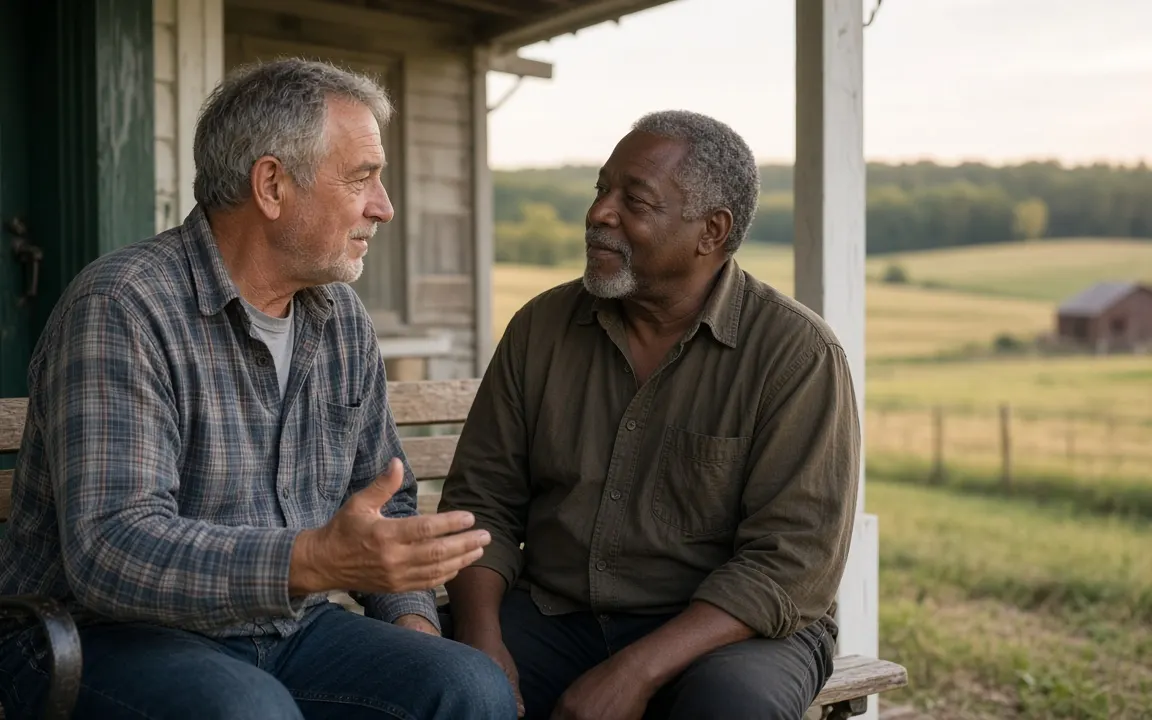
Kinston, North Carolina
Pet loss support in Kinston: the local picture
Eastern North Carolina has weathered storm after storm and flood after flood, and for some Kinston residents an animal's death stirs up memories of everything else lost to high water. If that happens, naming it helps. A trusted friend, a therapist or a phone line for grieving animal owners can help you separate one sorrow from another, so neither has to be carried alone.
For Kinston youngsters, a household animal's passing may be their earliest encounter with death. Speak plainly and honestly, and include them: sorting snapshots into a small album, coloring a card, or helping settle a stone into the flower bed. Grief in children tends to come and go, so expect it to resurface at unexpected moments for several weeks, and answer each question again patiently.
Farm and rural owners around Kinston sometimes feel they aren't allowed to grieve a working dog or a barn cat as deeply as a city owner grieves a lapdog. Grief follows closeness, not breed or job, and research on pet loss backs that up. If you spent every day with them, through every season and every chore, missing them this much makes complete sense.
Kinston's population is around 19,705, the 54th-largest of the 64 North Carolina communities we cover. Raleigh, roughly 68 miles off, is the closest larger centre, and a share of the providers who cover Kinston run from there.
If you want to compare providers, look at Goldsboro (22 miles), Greenville (25 miles, a larger centre) and New Bern (32 miles). Distance matters because pickup fees and the time until the ashes come back both grow with the drive.
Our estimate
7,250
Estimated dog- or cat-owning households in Kinston
How we calculated this
19,705 ÷ 2.5 = 7,882 households; × 53% (dog) + 39% (cat) = 7,250. Multi-pet homes count once.
Our estimate
600
Kinston families who lose a dog or cat each year (estimate)
How we calculated this
7,250 dog/cat-owning homes ÷ average lifespan (dog: 12.69 yrs + cat: 11.18 yrs) ≈ 600 a year. The real figure is unlikely to be lower.
53%[1]
53% of US households own a dog, which is about 71 million households.
12.69 years[2]
US dogs have an average life expectancy at birth of 12.69 years.
39%[3]
39% of US households own a cat, which is about 53 million households.
11.18 years[4]
US cats seen at Banfield hospitals have an average life expectancy at birth of 11.18 years.
If a number here surprises you, the primary material is American Pet Products Association (APPA) 2025 State of the Industry and Montoya et al. 2023, Frontiers in Veterinary Science; we only apply it to this.

How North Carolina remembers the people it loses
Cremation is chosen for roughly 57.3%[5] of people in North Carolina, and attitudes to death often differ between generations in the same family. Older relatives may find a pet memorial unusual, while younger ones share photos and tributes online without a second thought. If family members react differently to your pet's death, the gap is often about custom rather than caring. Saying plainly what would help you usually bridges it.
NFDA 2024 Cremation & Burial Report state projections (via Occasional Sage) (2024) is where the North Carolina figure comes from. It counts people; we use it because attitudes to cremating a pet in Kinston tend to follow attitudes to cremation generally.
How Kinston's climate shapes remembering
Seasons shape grief more than people expect. The first spring walk, the first cold evening without them on your lap, the first holiday: each can bring a fresh wave. Knowing that ahead of time helps. A wave isn't a setback; it's a sign of how woven into your year your pet was.

Paying for grief support in Kinston
A good share of US pet loss support costs nothing at all. The first pet loss hotline opened at UC Davis in 1989[6], and university lines still run today: Cornell's Pet Loss Support Hotline is staffed by veterinary students trained by grief counselors, and Tufts runs a volunteer helpline with evening hours and voicemail. Check current times before calling from Kinston.
For a line-by-line price table, see the North Carolina overview; for what's included in each option, see our services.

Free tool
Memorial budget planner
Add up cremation, urn, keepsakes and a farewell so the total holds no surprises.
Practical rules worth knowing in North Carolina
Two practical questions come up most after a pet dies: can I take time off, and where can I lay them to rest? Time off is between you and your employer, and a child's school will usually excuse a day if you explain. Burial and scattering fall under local rules, and here's the North Carolina summary we keep.
Not sure which office covers Kinston? The North Carolina local government directory is the official list.
Start with the North Carolina rules, which cover burial, scattering and oversight for the whole state, and treat Kinston's local ordinances as a possible extra layer.
Getting through the first month
- Expect shock before sadness. After a sudden death, numbness, racing thoughts or disbelief are common in the first days. They don't mean you didn't care.
- Get the facts you need, then stop searching. A single talk with the vet about how it happened settles many of the what-ifs. A long night of googling tends to create new ones.
- Hand one practical task to someone else. Let a friend ring the family, or pick up the collar and lead from the vet's.
- Sleep and eat on a simple schedule even if you're not hungry or tired. Shock is exhausting.
- Tell the story out loud within the first week, whether that's to a friend, a bereavement helpline or a group online. Once spoken, it usually holds you less tightly.
- Notice images that won't fade. When the same upsetting moment plays over and over for weeks on end, that's worth taking to a counselor. Going early is good sense, not overreacting.
Rituals and remembrance in Kinston
A Kinston farewell might be a family standing together under the pecan trees, a porch-side prayer offered by a pastor or neighbor, or a private visit arranged through the provider before cremation. Some households postpone the gathering until the ashes reach them, then invite relatives for a simple afternoon of stories. No outside standard applies; your family's instincts are enough.
the planning tools turn your pet's details into figures, Every option Kinston families choose between is on the services page, or look at how readers voted in our polls, browse in-depth guides or recent articles. More local pages: Charlotte, Winston-Salem, Durham and Greensboro, the North Carolina overview and every city in the United States.

Reader polls
What would you choose?
Vote anonymously and see how other readers answered. The results are live counts from people who visit this site, so they show real opinions, not a scientific sample.
Which kind of support have you tried since your loss?
Tap an answer to vote and see how others answered. Anonymous.
How do you mark the day your pet died?
Tap an answer to vote and see how others answered. Anonymous.
If you had to decide today, which aftercare would you choose for your pet?
Tap an answer to vote and see how others answered. Anonymous.

Free tools to help you plan
Memorial budget planner
Add up cremation, urn, keepsakes and a farewell so the total holds no surprises.

Pet loss grief check-in
A private, two-minute check-in on how you're coping, with ideas that match where you are.

Farewell & memorial service planner
Build a simple goodbye: who, where, readings, rituals and a checklist.
Questions people ask
Will I have to travel to Raleigh to arrange things?
Not usually. Providers based in Raleigh (roughly 68 miles from Kinston) collect from here as a matter of routine, and the paperwork is done by email or phone. If you want to be present for a witnessed cremation, that is when the drive matters.
Is Kinston big enough to have several pet aftercare providers?
Probably, on the numbers. By our estimate about 7,250 Kinston households keep a dog or cat and around 600 lose one each year, which is enough steady demand to support more than one provider. We derive that from population (about 19,705), household size and national ownership and lifespan figures.
How do North Carolina attitudes to cremation compare?
NFDA 2024 Cremation & Burial Report state projections (via Occasional Sage) (2024) puts the North Carolina human cremation rate at about 57.3%[5]. We show it on the Kinston page because pet aftercare choices tend to track it: where cremation is normal for people, communal and private pet cremation are both easy to find.
Can a provider from a neighbouring town collect from Kinston?
Usually yes. Goldsboro is about 22 miles away, Greenville is about 25 miles away and New Bern is about 32 miles away, all inside a normal collection radius. Get the mileage written into the quote so there is no surprise on the day.
Is it normal to grieve my pet more than some people I've lost?
Yes, and it's more common than people admit. In a 2026 UK study, 21.0%[8] of people who had lost both a pet and a person named the pet's death as their most distressing loss. Research comparing the two found closeness, not species, is the strongest predictor of how much it hurts. A pet shares every ordinary hour, which is exactly why the gap feels so big.
Why do I feel so guilty after putting my pet to sleep?
Because you were responsible for them and had to decide with incomplete information. Guilt is one of the most common reactions after euthanasia, even when the timing was right. Most pets now die this way: in a large US study, 83.0%[9] of dog deaths were by euthanasia. Writing down what you knew on the day, and talking it through with someone, usually eases the loop.


Sources and our estimates
- [1] 53% of US households own a dog, which is about 71 million households. American Pet Products Association (APPA) 2025 State of the Industry, 2025.
- [2] US dogs have an average life expectancy at birth of 12.69 years. Montoya et al. 2023, Frontiers in Veterinary Science - Banfield Pet Hospital life expectancy tables (13.3 million dogs, 2.4 million cats, 2013-2019), 2023.
- [3] 39% of US households own a cat, which is about 53 million households. American Pet Products Association (APPA) 2025 State of the Industry, 2025.
- [4] US cats seen at Banfield hospitals have an average life expectancy at birth of 11.18 years. Montoya et al. 2023, Frontiers in Veterinary Science - Banfield Pet Hospital life expectancy tables (13.3 million dogs, 2.4 million cats, 2013-2019), 2023.
- [5] The NFDA projected North Carolina's cremation rate at 57.3% for 2024. NFDA 2024 Cremation & Burial Report state projections (via Occasional Sage), 2024.
- [6] The first pet loss support hotline was set up in 1989 at the University of California, Davis, according to Cornell. Cornell University College of Veterinary Medicine, 2026.
- [7] Roughly 850,000 bereaved U.S. pet households a year may not find the grief support they need. Our estimate: 1.5M pet cremations x 56.7% couldn't find support. How we calculate.
- [8] Among UK adults who had lost both a pet and a person, 21.0% named the pet's death as their most distressing bereavement. Hyland et al., 'No pets allowed: Evidence that prolonged grief disorder can occur following the death of a pet', PLOS ONE (2026), 2026.
- [9] In the Dog Aging Project, 83.0% of 646 US dog deaths (Dec 2019-Mar 2021) were by euthanasia. Dog Aging Project End of Life Survey - Journal of the American Veterinary Medical Association (2026), via PubMed Central, 2026.
Tell us what would help
Tell us what you need and where you are. We'll reply by email with clear options and prices so you can decide in your own time.