Pet bereavement support for Aurora families
Roughly 150,000 Aurora households have a dog or cat, by our estimate. Losing one is common, but it rarely feels ordinary. Here's how to find support that takes it seriously.
- Free groups and helplines, explained
- Counselors who understand animal loss
- Crisis numbers if things feel too heavy
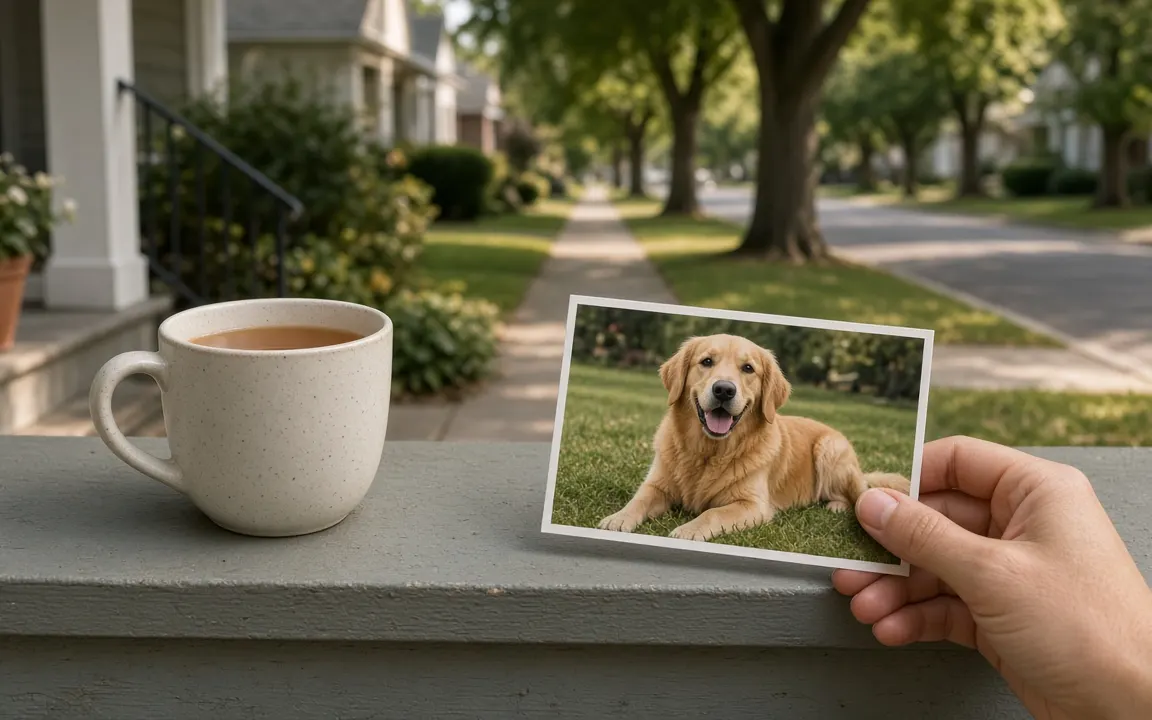
Aurora, Colorado
What grieving a pet in Aurora can be like
Aurora is one of Colorado's most diverse cities, with families from across the country and the world, and farewells here take many forms: a prayer, a candle, a meal together, or a moment in the backyard with the mountains in view. If you want to sit with your pet first or witness the cremation, say so, and pick a provider who respects your family's traditions.
For military families and newcomers in Aurora, a pet may be the one constant through several moves, so its loss can hit very hard. Pet loss support lines and online groups can help, especially when family lives far away. Your vet may also know local groups. Time outside, perhaps on the High Line Canal trail, can give you room to grieve.
In a city like Aurora, support tends to cluster around a few places: the humane society, the emergency vet, a church or community center with a bereavement ministry, and a handful of counselors in private practice. Groups here often meet monthly rather than weekly, so check the next date before you rely on it, and ask whether newcomers can simply listen the first time without being expected to share.
About 410,053 people live in Aurora, which makes it the 3rd-largest of the 36 Colorado communities we cover. The nearest larger centre is Denver, about 9 miles (14 km) away, which is where some providers serving Aurora are based.
Aurora sits within easy reach of Denver (8 miles), Centennial (10 miles) and Englewood (10 miles). A provider based in any of them will usually collect from Aurora; ask what the mileage adds to the bill.
Our estimate
150,000
Aurora: dog- or cat-owning households, our estimate
How we calculated this
410,053 ÷ 2.5 = 164,021 households; × 53% (dog) + 39% (cat) = 150,000. Homes are counted once however many pets they keep.
Our estimate
12,500
Estimated dog and cat losses in Aurora each year
How we calculated this
150,000 dog/cat-owning homes ÷ average lifespan (dog: 12.69 yrs + cat: 11.18 yrs) ≈ 12,500 a year. A floor, not a ceiling.
53%[1]
53% of US households own a dog, which is about 71 million households.
12.69 years[2]
US dogs have an average life expectancy at birth of 12.69 years.
39%[3]
39% of US households own a cat, which is about 53 million households.
11.18 years[4]
US cats seen at Banfield hospitals have an average life expectancy at birth of 11.18 years.
The numbers above come from Montoya et al. 2023, Frontiers in Veterinary Science and American Pet Products Association (APPA) 2025 State of the Industry, if you'd like to read the original sources.

How Colorado remembers the people it loses
About 77.4%[5] of people in Colorado are cremated, one of the higher rates around. That usually means memorial customs are flexible and personal rather than bound to a cemetery. For grieving pet owners, that's freeing: a small gathering in the backyard, a scattering on a favorite hike or a candle on the anniversary will feel normal to most people here, not odd or excessive.
We take the Colorado rate from NFDA 2024 Cremation & Burial Report state projections (via Occasional Sage) (2024). It is a human statistic; there is no equivalent pet figure for Aurora, and we would rather show a real number than invent one.
Weather, seasons and remembrance in Aurora
The winter holidays can be a hard stretch after a pet dies, with empty spots at gatherings and a stocking nobody will fill. Some families in cold places like Aurora hang an ornament with their pet's name or give to a shelter in their memory each year. Small rituals like these acknowledge the gap instead of pretending it isn't there.
Around Aurora, January lows average about 18°F, and that stretch of the year pushes most people indoors. It's a good season for slower remembrance projects: sorting photos into an album, writing down stories before details fade, or making something from their collar or blanket. Projects like these give restless evenings a focus and leave you with something to keep.

Free and paid support for Aurora families
Money worries and grief often arrive together. In a US survey, 61%[6] of owners said the cost of aftercare was a concern. Support itself doesn't have to add to the bill: many groups ask only for an optional donation, and phone and online support is mostly free. If you'd like a counselor, compare two or three and ask about sliding-scale fees.
The full price table by product is on our Colorado page, and the services page explains what each option includes.

Free tool
Memorial budget planner
Add up cremation, urn, keepsakes and a farewell so the total holds no surprises.
Permissions worth checking in Colorado
Grief doesn't come with paperwork, but a few decisions do. If your pet is buried at home, the land and any nearby water can matter; if you scatter ashes, the landowner's permission matters most. Here's what we know for Colorado. For anything we don't cover, a short call to your local council or city office settles it.
To find your county or city office in Colorado, start with the official Colorado local government directory.
For Colorado's rules on burying a pet at home or scattering ashes, see the Colorado guide. Local rules in Aurora can be stricter than the state's, especially in homeowners' associations and rentals.
What helps, one step at a time
- Tell one person tonight, even by text, so someone knows you're on your own with this.
- Change the silence. Put the radio on, play a podcast or phone someone at the times your pet used to fill; the quiet loses some of its sting.
- Put one outing a day on the calendar. Small is fine: a coffee, a stop at the library, the usual walk at the usual hour.
- Find an evening online group. For people who live alone, the stretch after dinner is often when the house feels emptiest.
- Keep an eye on drinking and sleep. Without anyone else around, both can slip unnoticed. Mention it to your doctor if they have.
- If a night turns very dark, call a crisis line. Every sort of grief is a fair reason to ring, and feeling the way you do is reason enough on its own.
Ways Aurora families remember a pet
Aurora families often include children who have moved schools and homes along with their pet. When that pet dies, it may feel like losing a piece of every place they have lived. Honest, simple explanations help, and so does giving them a role, such as choosing a photo or a spot for a memorial plant. A yearly tradition can keep the memory alive.
or see what other families chose in the poll results, go deeper with the guides or catch up on recent articles, use the free tools before you ring anyone, Compare every option on our services page. If you live between Aurora and Denver, Fort Collins, Lakewood and Colorado Springs, either page applies. Every other community in Colorado, and all of the United States, is listed too.

Reader polls
What would you choose?
Vote anonymously and see how other readers answered. The results are live counts from people who visit this site, so they show real opinions, not a scientific sample.
How did your workplace respond when your pet died?
Tap an answer to vote and see how others answered. Anonymous.
How do you mark the day your pet died?
Tap an answer to vote and see how others answered. Anonymous.
If you had to decide today, which aftercare would you choose for your pet?
Tap an answer to vote and see how others answered. Anonymous.

Free tools to help you plan
Memorial budget planner
Add up cremation, urn, keepsakes and a farewell so the total holds no surprises.

Pet loss grief check-in
A private, two-minute check-in on how you're coping, with ideas that match where you are.

Farewell & memorial service planner
Build a simple goodbye: who, where, readings, rituals and a checklist.
Questions people ask
Can a provider from a neighbouring town collect from Aurora?
Usually yes. Denver is about 8 miles away, Centennial is about 10 miles away and Englewood is about 10 miles away, all inside a normal collection radius. Get the mileage written into the quote so there is no surprise on the day.
Where are the providers that serve Aurora actually based?
Some are local, and some run from Denver, about 9 miles away. That is normal for a city this size. What matters is the collection time they quote for Aurora and whether the drive is priced into the total, so ask both up front.
Is cremation common in Colorado?
For people, yes: about 77.4%[5] of Colorado deaths end in cremation, according to NFDA 2024 Cremation & Burial Report state projections (via Occasional Sage) (2024). Nobody publishes the same figure for pets, but in our experience pet choices in Aurora follow the human pattern closely, so cremation is the default most families here start from.
How many pet owners live in Aurora?
By our estimate, about 150,000 households in Aurora have at least one dog or cat, and around 12,500 are lost each year. We calculate this from the city's population of about 410,053, the average household size and national ownership and lifespan figures, so treat it as a floor rather than an exact count.
What should I say when someone asks how my pet is?
A short answer you've prepared helps, because the question tends to come at the grocery store or the school gate when you least expect it. Something like 'He died last month, and we miss him a lot' is enough. You can say more if you want to talk, or change the subject if you don't. Most people respond kindly once they know, and many share a story of their own.
How long does grief for a pet last?
There's no set timetable. Many people find the sharpest pain eases over weeks to a few months, while waves return on anniversaries and in old routines. In one US study, nearly 1 in 3 owners[8] grieved for at least six months. If after several months you can't function day to day, or the longing is getting stronger rather than softer, it's worth talking to a professional.


Sources and our estimates
- [1] 53% of US households own a dog, which is about 71 million households. American Pet Products Association (APPA) 2025 State of the Industry, 2025.
- [2] US dogs have an average life expectancy at birth of 12.69 years. Montoya et al. 2023, Frontiers in Veterinary Science - Banfield Pet Hospital life expectancy tables (13.3 million dogs, 2.4 million cats, 2013-2019), 2023.
- [3] 39% of US households own a cat, which is about 53 million households. American Pet Products Association (APPA) 2025 State of the Industry, 2025.
- [4] US cats seen at Banfield hospitals have an average life expectancy at birth of 11.18 years. Montoya et al. 2023, Frontiers in Veterinary Science - Banfield Pet Hospital life expectancy tables (13.3 million dogs, 2.4 million cats, 2013-2019), 2023.
- [5] The NFDA projected Colorado's cremation rate at 77.4% for 2024. NFDA 2024 Cremation & Burial Report state projections (via Occasional Sage), 2024.
- [6] 61% of US owners in the Cooney survey rated the cost of after-death body care as a concern (27.9% concerned, 33.1% very concerned). Cooney, Kogan, Brooks, Ellis - Pet Owners' Expectations for Pet End-of-Life Support and After-Death Body Care, Topics in Companion Animal Medicine (2020), 2020.
- [7] Roughly 850,000 bereaved U.S. pet households a year may not find the grief support they need. Our estimate: 1.5M pet cremations x 56.7% couldn't find support. How we calculate.
- [8] A 2009 Bulletin of the Menninger Clinic study of 106 pet owners found nearly 1 in 3 grieved for at least six months. SHRM — Grieving a Pet's Death: Should Workers Get Time Off? (2016), 2009.
Tell us what would help
Tell us what you need and where you are. We'll reply by email with clear options and prices so you can decide in your own time.