Missing them in Vancouver: where to find pet loss support
Groups, helplines, counselors who take animal loss seriously and small rituals you can do at home: a plain guide to pet loss support in Vancouver, written for hard days.
- No therapy pitch, just clear options
- Ideas for remembering them around Vancouver
- Suggestions by email, in your own time
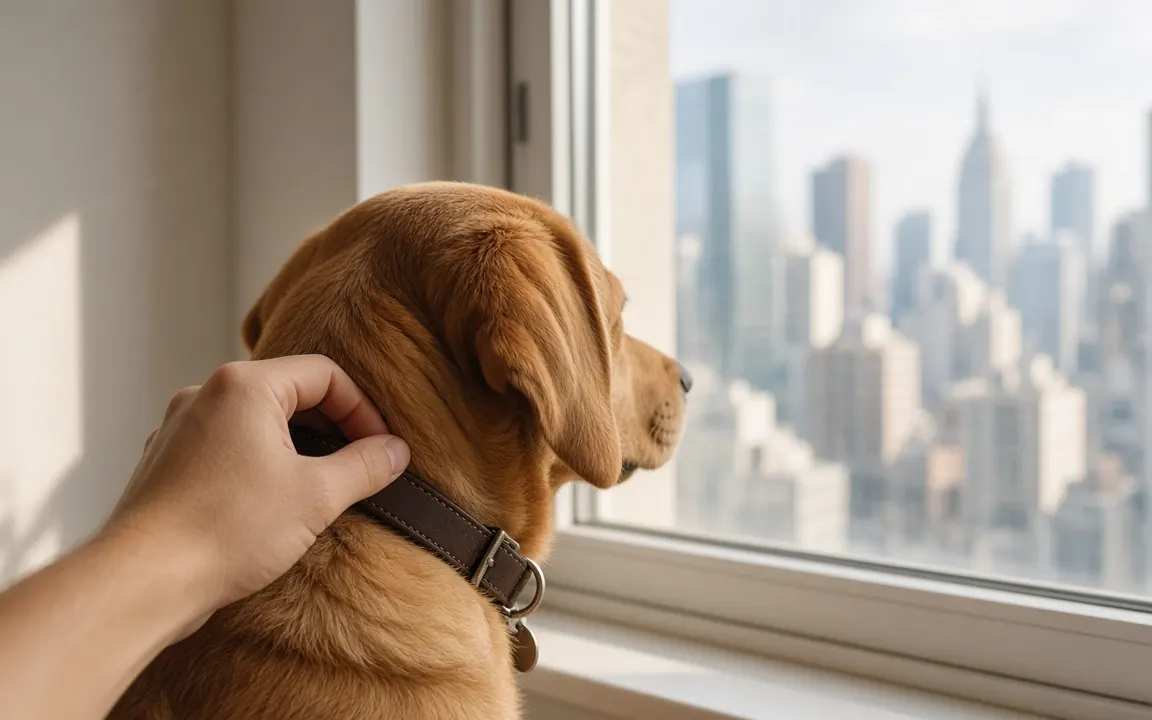
Vancouver, British Columbia
Where Vancouver pet owners find support
Vancouver's long rainy season, with its early winter darkness, can make grief feel heavier, especially in a small apartment where a pet was the main companion and the one waiting when you came home. A simple farewell at home before collection gives you time to say goodbye. You might invite a friend over, or connect with family abroad by video so they can share the moment too.
Many Vancouver residents live far from their families, and a pet may have been the one constant through moves, new jobs and high rents. That can make the loss feel especially lonely. Talking to friends who knew your pet, writing down memories while they are fresh, or joining a pet loss group, in person or online, can help. Grief after a pet's death follows no timeline.
People in Vancouver grieve in many languages and traditions, and pet loss support doesn't always reflect that. If English-language groups don't feel right, ask at your place of worship, a cultural association or a community center that serves your language. Many faith leaders are willing to say a few words or a prayer for an animal, even where their tradition has no formal rite for it. Being understood in your own words matters.
With roughly 631,000 residents, Vancouver is the largest of the 6 British Columbia communities we cover.
If you want to compare providers, look at North Vancouver (3 miles), West Vancouver (6 miles) and Surrey (19 miles). Distance matters because pickup fees and the time until the ashes come back both grow with the drive.
87%[1]
British Columbia's cremation rate is estimated at about 87%, the highest in Canada.
7.5%[2]
7.5% of UK adults whose bereavement was the death of a pet met criteria for prolonged grief disorder (PGD).
34.5%[3]
34.5% of bereaved pet owners were told 'it's just a pet'.
56.7%[4]
56.7% of bereaved pet owners in the RSPCA survey could not find the support they needed.
None of the figures on this this page are ours alone: they rest on RSPCA and Hyland et al., 'No pets allowed: Evidence that prolonged grief disorder can occur following the death of a pet', PLOS ONE (2026).
What local memorial customs mean for your grief
Cremation is the usual choice in British Columbia: about 87%[1] of people who die there are cremated. Where cremation is this common, remembrance often isn't tied to a grave. Families hold celebrations of life, scatter ashes somewhere meaningful or keep them at home. Pet loss tends to follow the same pattern, which can leave grief without a fixed place to visit. Choosing one, a bench, a trail or a tree, often helps.
The British Columbia percentage above is from DFS Memorials 'Cremation Nation' (estimate citing CANA) (2025) and refers to human funerals. Treat it as context for Vancouver, not as a count of pets.
Vancouver's seasons and your grief
Daylight changes through the year can shift grief without you noticing. When evenings draw in, the empty hours after dark often feel longer; when days lengthen, you may find more energy for a walk or a planting. Watching for that pattern helps you plan: arrange company for the darker stretch and save outdoor rituals for the lighter one.
Support costs near Vancouver, from free to paid
In Canada, 988 is free by call or text at any hour, and many humane societies and veterinary colleges share pet loss resources at no cost. Private counseling is charged per session; check whether a workplace employee assistance program or extended health plan covers some sessions. The table shows published aftercare prices from Canadian providers, since many Vancouver families face those decisions in the same week.
The British Columbia price table breaks costs down by product; our services page explains what sits behind each line.

Free tool
Memorial budget planner
Add up cremation, urn, keepsakes and a farewell so the total holds no surprises.
Before an outdoor goodbye in British Columbia
Many people want to say goodbye somewhere public: a beach, a trail, a park bench. Those places often have their own rules, set by whoever manages the land rather than by British Columbia as a whole. A quick email to the park office usually gets a friendly answer, and asking first means you won't be worrying during the ceremony itself. The broader rules for British Columbia follow.
City of Vancouver publishes Vancouver's official guidance. Note that it deals with public collection, not with booking a private cremation.
In Canada, 988 is available by call or text at any hour for anyone in distress, including grief after a pet. Veterinary colleges and humane societies in several provinces share pet loss resources, and many groups now meet online. Winters are long in most of the country, so many families keep ashes at home and hold a burial or planting in spring.
Home burial and scattering are governed at the British Columbia level first; our British Columbia rules summary has the detail. Then check whether Vancouver or your HOA adds anything.
Small steps for the days after a loss
- Ask for time off in specific terms. Managers say yes more readily to 'Thursday and Friday' or 'a day from home' than to a vague request with no end date.
- Tell one colleague you trust what's happened, so someone in the office gets the silence.
- Plan the hardest hours. Whichever part of the day feels most hollow, fill it on purpose: a class, a walk or a phone call.
- Try one kind of support this week. Ring a helpline, join an online group, or book an initial session with a counselor.
- Write down what you knew on the day when guilt over the decision won't leave you alone. Putting it on paper tends to break the cycle of second-guessing.
- Choose a date to remember them. It might be their birthday or the day they died. Pick a single thing to do when it comes around.
Honoring them close to home in Vancouver
In multigenerational Vancouver households, grandparents and children often feel a pet's death most. Tell children simply and honestly what happened, and let them take part in a small farewell if they want. For an older relative, the pet may have been company through long quiet days, so checking in with them in the weeks afterward can matter more than any ceremony.
or see how other readers answered in our polls, Our services overview lays out every option side by side, use the free tools before you ring anyone, there are guides for the big decisions and articles for the details. Close to Vancouver we also cover Victoria, North Vancouver, West Vancouver and Surrey; the full list for British Columbia and for Canada is a click away.

Reader polls
What would you choose?
Vote anonymously and see how other readers answered. The results are live counts from people who visit this site, so they show real opinions, not a scientific sample.
Which moment of the day feels emptiest now?
Tap an answer to vote and see how others answered. Anonymous.
How did your workplace respond when your pet died?
Tap an answer to vote and see how others answered. Anonymous.
If you had to decide today, which aftercare would you choose for your pet?
Tap an answer to vote and see how others answered. Anonymous.

Free tools to help you plan
Memorial budget planner
Add up cremation, urn, keepsakes and a farewell so the total holds no surprises.

Pet loss grief check-in
A private, two-minute check-in on how you're coping, with ideas that match where you are.
Farewell & memorial service planner
Build a simple goodbye: who, where, readings, rituals and a checklist.
Questions people ask
Why does the Vancouver page quote a human cremation rate?
Because it is the best local signal we have. DFS Memorials 'Cremation Nation' (estimate citing CANA) (2025) reports about 87%[1] of British Columbia residents are cremated. There is no official pet equivalent, and inventing one would be worse than quoting a real, clearly labelled number.
Can a provider from a neighbouring town collect from Vancouver?
Usually yes. North Vancouver is about 3 miles away, West Vancouver is about 6 miles away and Surrey is about 19 miles away, all inside a normal collection radius. Get the mileage written into the quote so there is no surprise on the day.
What should I say when someone asks how my pet is?
A short answer you've prepared helps, because the question tends to come at the grocery store or the school gate when you least expect it. Something like 'He died last month, and we miss him a lot' is enough. You can say more if you want to talk, or change the subject if you don't. Most people respond kindly once they know, and many share a story of their own.
Do vets in Vancouver offer any grief support?
Many vet practices don't run formal support, but staff see loss every week and usually know what exists locally, from groups to counselors who take animal loss seriously. Some send a sympathy card or a paw print, and a few host remembrance events. It's always fine to call and ask, even weeks later.
When is it OK to get another pet?
When it feels right for you and everyone in the home; there's no rule about timing. Some people welcome a new animal within weeks because the house needs life in it, while others wait until after the first anniversary. A new pet won't replace the one you lost, and it doesn't need to. If family members disagree, waiting a little often helps everyone feel ready.
Why does grief feel worse in the evenings?
Because that's often when your pet's presence was strongest: the walk after work, the cat on your lap, the last trip outside before bed. The routine is still in your body even though they're gone. It can help to put something new into that hour, such as a call, a short walk or an online group that meets in the evening.


Sources and our estimates
- [1] British Columbia's cremation rate is estimated at about 87%, the highest in Canada. DFS Memorials 'Cremation Nation' (estimate citing CANA), 2025.
- [2] 7.5% of UK adults whose bereavement was the death of a pet met criteria for prolonged grief disorder (PGD). Hyland et al., 'No pets allowed: Evidence that prolonged grief disorder can occur following the death of a pet', PLOS ONE (2026), 2026.
- [3] 34.5% of bereaved pet owners were told 'it's just a pet'. RSPCA — Pet Loss Survey Results, 2026.
- [4] 56.7% of bereaved pet owners in the RSPCA survey could not find the support they needed. RSPCA — Pet Loss Survey Results, 2026.
- [5] Each year about 110,000 U.S. pet owners may go on to meet prolonged grief disorder criteria after a pet dies. Our estimate: 1.5M pet cremations (proxy for pet deaths with an engaged owner) x 7.5% PGD rate. How we calculate.
Find pet loss support in Vancouver
Tell us what you need and where you are. We'll reply by email with clear options and prices so you can decide in your own time.